How 7,000 Working Women Marched to Versailles to Kidnap the Queen
Issue No. 5 ⚜️ October 22, 2026
This edition of The Dispatch is dedicated to the peaceful majority who marched for public schools in France on October 17, 2026. The story you’re about to read is essentially a bulleted list of definitely not peaceful events that happened during the first five months of the French Revolution, ending this month 237 years ago. This was supposed to be a spooky Halloween edition where I introduced my new tours, rad new hats and fave guests of the month (Dianne, you better believe you’re in the next issue) but things got a little out of hand over here and I thought, well, riots and gross stuff… I have a story for that. Anyway, and I’m terribly jet lagged, wrote this in two days instead of six and still hope you love it. What a story!
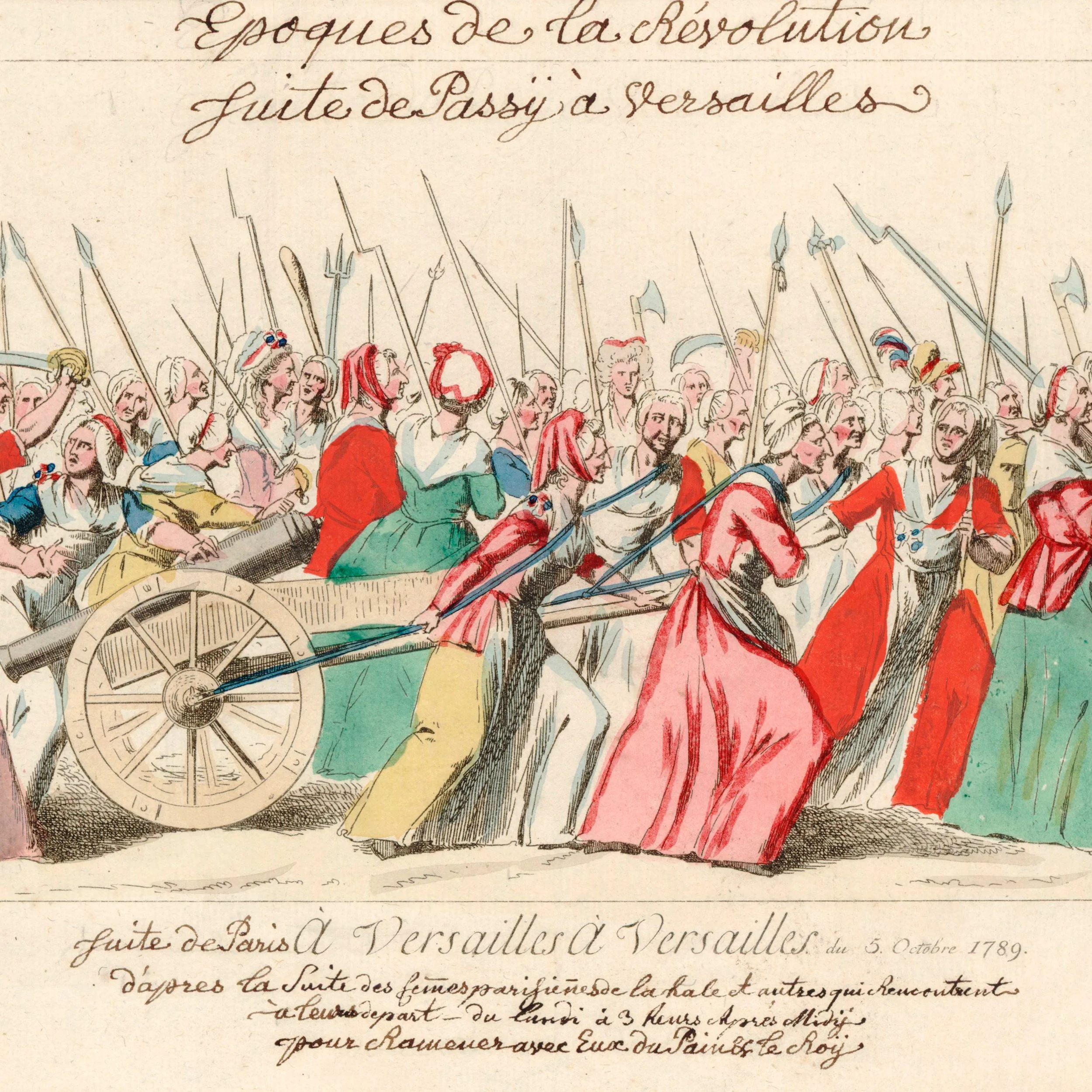
The Women’s March on Versailles, October 5, 1789.
France, 1789
Catastrophic hail, a summer drought and an extreme winter caused widespread unemployment and endemic food shortages across the country. France was teetering on structural collapse, worsened by the cost of backing the American Revolution. Revolts ensued.
Versailles, May 5
King Louis XVI brought together the Estates-General for the first time in 175 years. The clergy (the First Estate), the nobility (the Second Estate) and everybody else (the Third Estate) discussed the situation.
The Third Estate accounted for 97% of the population. They paid tithes to the church and taxes to the king, and were legally obligated to meet the feudal demands of the nobility.
Each estate was given one vote on legal decisions, enabling the privileged estates to always outvote the Third. During this meeting, the Third Estate demanded equal voting rights by headcount.
Versailles, June 17
The Third Estate declared itself the National Assembly after the king and the privileged estates stalled on meeting its demand.
Versailles, June 20
The National Assembly was locked out of the Hôtel des Menus-Plaisirs, where discussions had taken place since May. Its members relocated to the Royal Tennis Court (an indoor sports hall built in 1686) and refused to leave until France had a constitution.
The king conceded within a week and ordered the other estates to join the Assembly. Behind the scenes, he mobilized Swiss and German troops, either to start some trouble or to have backup when shit hit the fan (historians don't always agree on this).
Versailles, July 11
Popular finance minister Jacques Necker (who pushed for public financial transparency) received a letter from the king over dinner, dismissing him from his position and ordering him to leave the country. He finished his meal without letting on. By the next day, he and his wife had slipped away to the Austrian Netherlands (modern Belgium).
Paris, July 14—Bastille Day
Fearing a crackdown after Necker's dismissal, the revolutionaries amassed by the thousands. They seized muskets from Les Invalides and stormed the Bastille prison for gunpowder.
Is it a revolt? No sire, it’s a revolution.
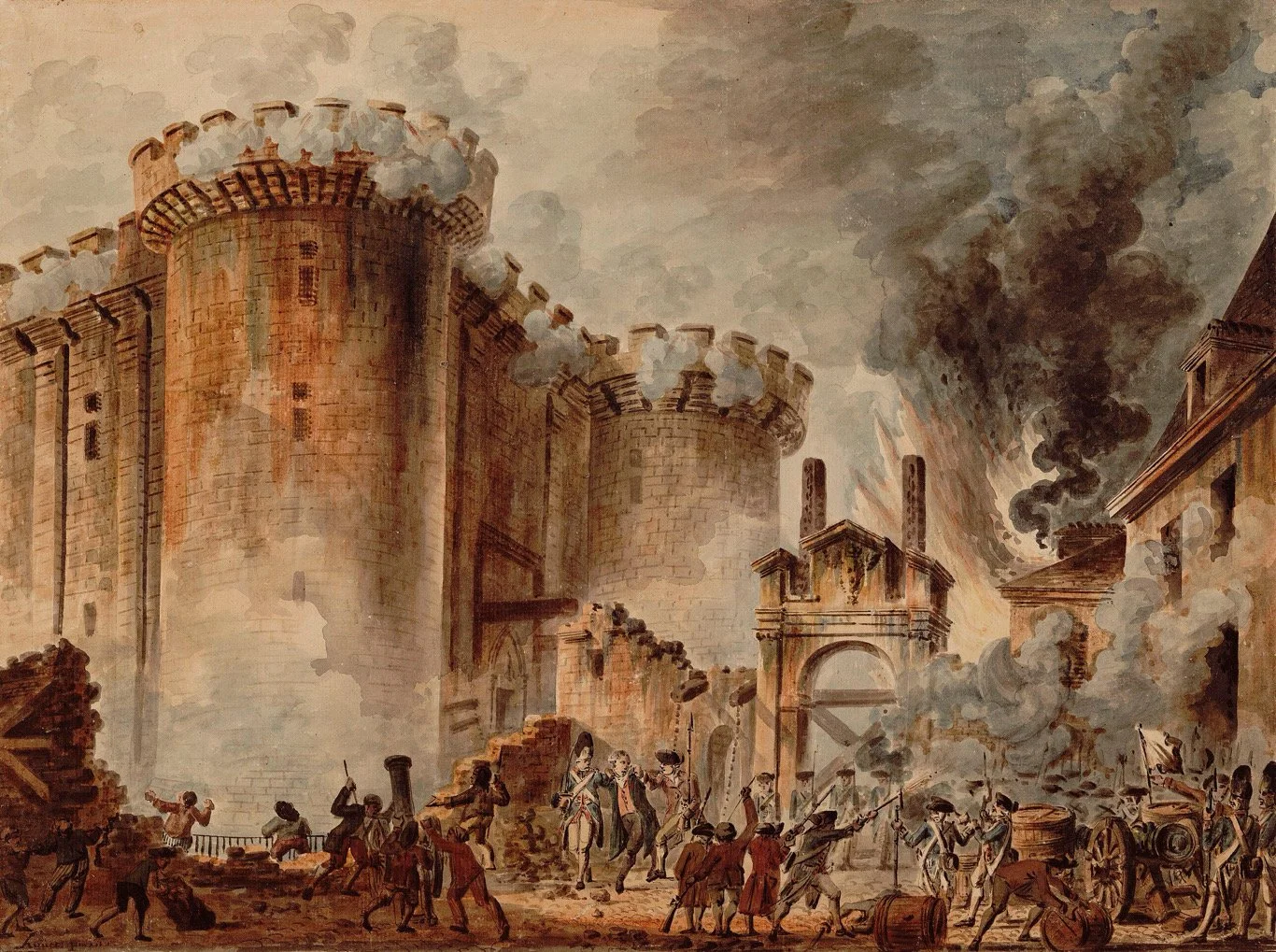
The Storming of the Bastille by Jean-Pierre Houël
Versailles, August 11
The clergy and the nobility lost their feudal privileges.
Versailles, August 26
The National Assembly approved the Declaration of the Rights of Man and of the Citizen.
Paris, September 12
Jean-Paul Marat launched L'Ami du peuple (The Friend of the People), the most celebrated, radical and scandalous newspaper of the Revolution.
Paris, September and October
Bread shortages, soaring inflation and fears of hoarding caused riots and fueled panic that the monarchy was trying to starve Parisians to death.
Versailles, October 1
The king's bodyguards hosted officers of the Flanders Regiment at a banquet in the palace opera house, where the king and queen made an appearance. Paris newspapers, L'Ami du peuple among them, reported that after the feast the party degenerated into an orgy sponsored by the queen. The participants allegedly trampled the cockade, the tricolor rosette of the Revolution. This blasphemy ignited fury throughout the capital.
Paris, October 5
In Les Halles, the most significant market in Paris since the 12th century, a fishwife stood on a table in the pouring rain. She addressed the other market women, blaming the queen and the vampires of Versailles for starving their families. A woman began beating a drum. Others rang nearby church bells. Seven thousand women assembled, chanting "Quand aurons-nous du pain?" (When will we have bread?). They marched through the downpour to the Hôtel de Ville (City Hall) and ransacked it for muskets, rifles and cannons before setting out for Versailles. Large numbers of men joined along the way.
Five hours behind the market women, 15,000 members of the National Guard joined the march. Their commander-in-chief, the Marquis de Lafayette, was horrified and became the prisoner of his own troops, afraid they would either desert him or murder him.
Versailles, October 5
Oblivious to the rage in Paris, the king enjoyed a morning of shooting, and the queen played in her peasant village. At 10 a.m., Marie Antoinette's hairdresser informed her that an armed force from Paris was marching toward Versailles. Completely obtuse, the king and queen didn't know who was coming or why.
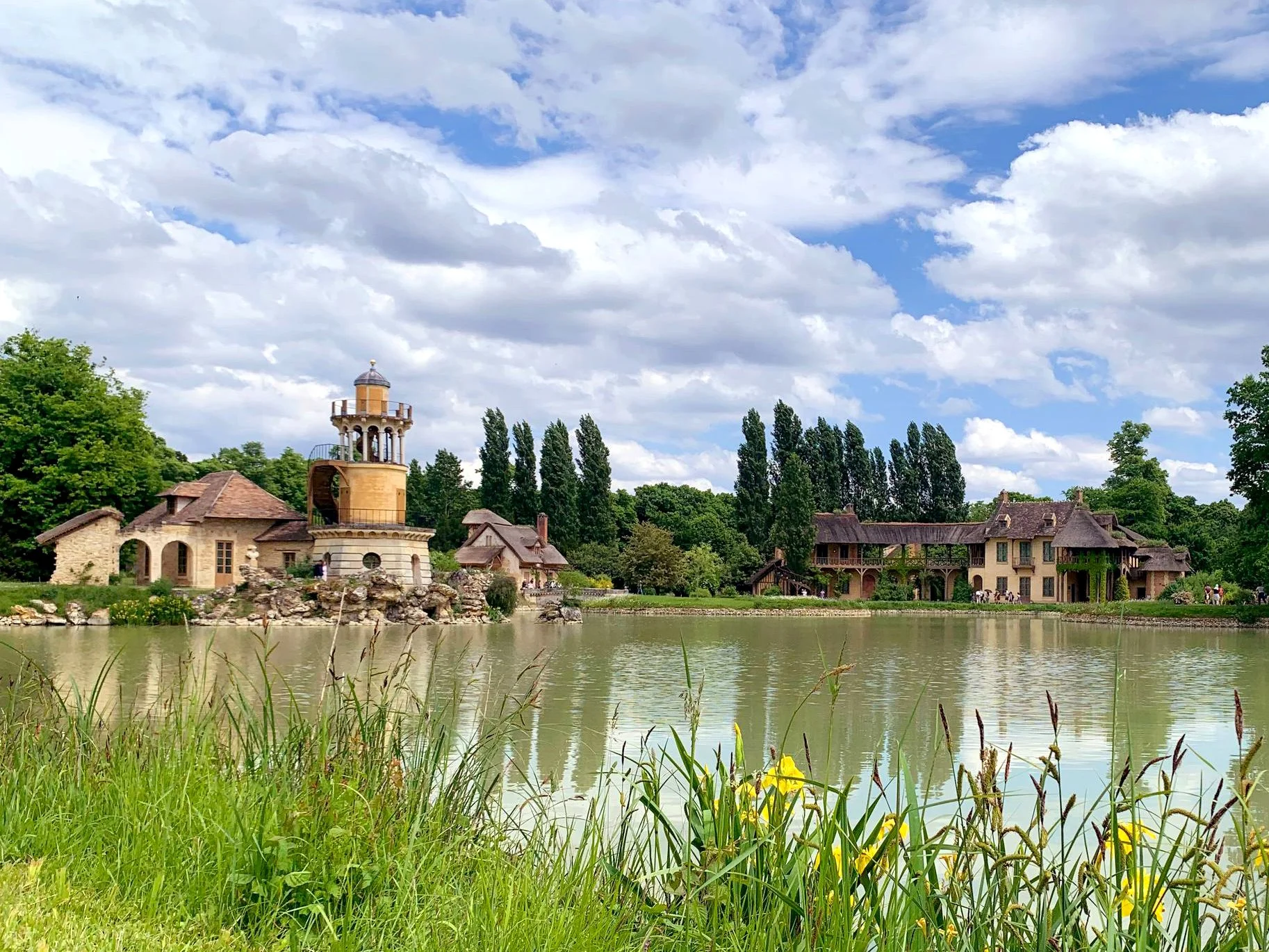
The Queen’s Hamlet in the backyard of Marie Antoinette’s private home at Versailles is a “rustic” peasant village, designed to her specifications, where she would essentially cosplay poverty (I do tours out here).
The mob arrived at Versailles, sodden from the rain. When the Swiss Guard deterred them from the palace, they invaded the National Assembly. They elected Louison Chabry, a 17-year-old girl, as their delegate and demanded to meet the king. She was shy and pretty, virtuous and eloquent. She fainted when she met him, breathing the word bread as she fell. It was an incredible PR stunt. The king used smelling salts to rouse her, helped her to her feet, then gave the order to deliver grain to Paris as a matter of urgency.
That night, the king wept as he signed his approval of the Declaration of the Rights of Man and of the Citizen and the abolition of feudalism.
Hours later, Lafayette arrived with his troops. He met the king unarmed and, in a prepared, melodramatic statement, proclaimed, "I have come to die at the feet of Your Majesty." After softening the king with this sentiment, Lafayette explained that he must return to Paris with the National Guard. It was 2 a.m. The king said he'd decide in the morning.
Versailles, October 6
Lafayette kept watch until 5 a.m., then moved to a family home nearby to get some sleep (unbelievable). The mob broke into the palace and demanded the location of the queen's apartments. They hacked her bodyguards to death, decapitated them and carried their heads around on pikes. The queen fled half-dressed through a secret passage that connected her rooms to the king's. She banged frantically on his door. No one answered. As she fled, the mob trashed her room, looking for her, slashing the curtains, chairs and mattress. A servant finally heard her banging and let her in. Her hair turned white at the temples from the stress (or so they say).
Lafayette was alerted to the situation and rushed to the palace. Under pressure from him, the king addressed the mob from the balcony, agreeing to come with them to Paris and insisting that the trampled cockade scandal wasn't true. Lafayette stood beside him, embraced one of his bodyguards and pinned a cockade to the man's hat. He urged Marie Antoinette onto the balcony, bowed to her and kissed her hand. After a terrible silence, the crowd chanted, "Long live the queen."
Paris, October 6
The king and queen stayed silent on the hours-long journey to Paris, swarmed by a vicious, unhinged mob. The monarchy never returned to Versailles.
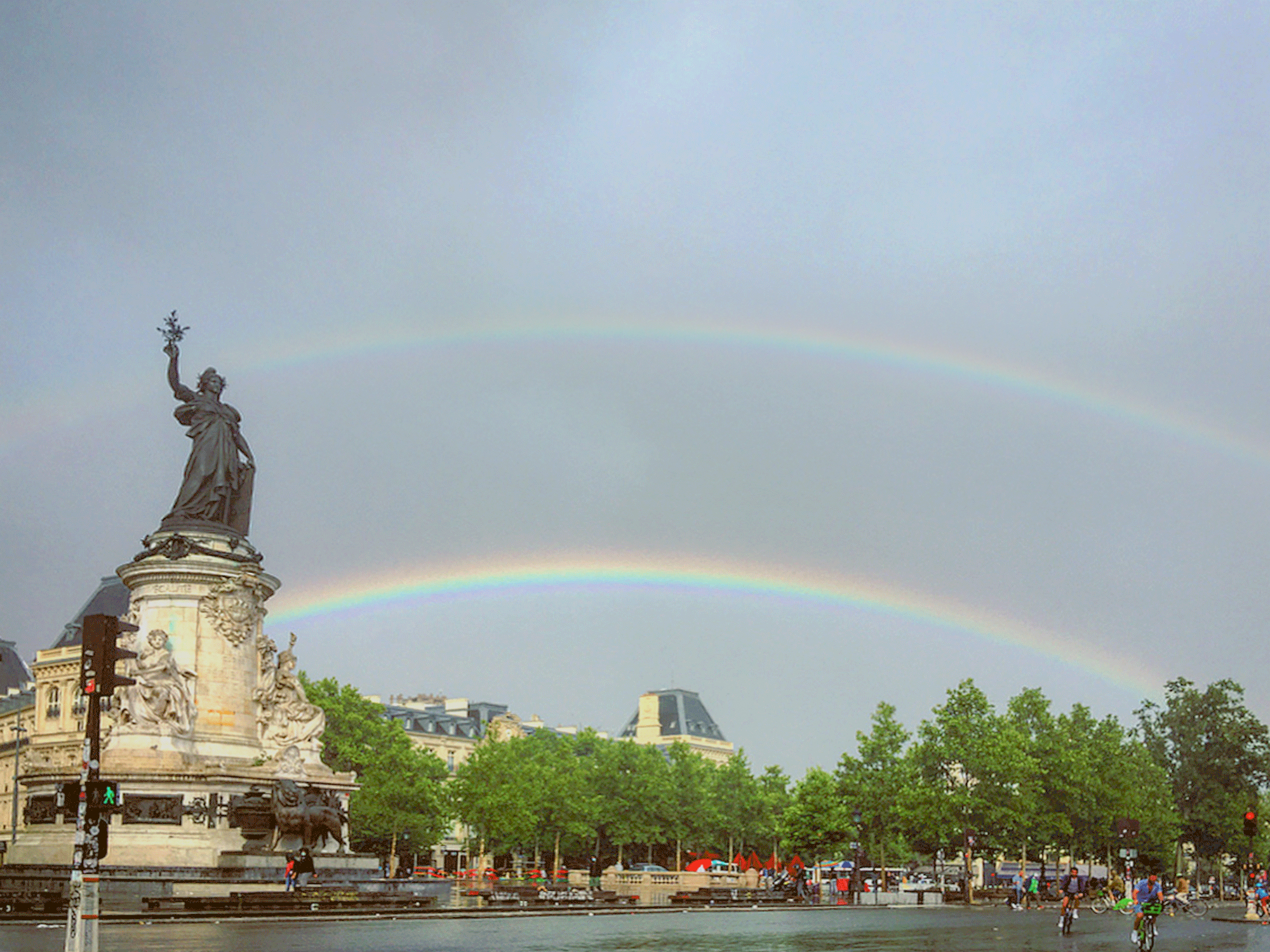
I took this photo of Marianne at Place de la Rèpublique in October of 2020 amidst the Covid 19 shutdown. We were living only two blocks away at the time. Marianne is the symbol of the French revolution and the fight for democracy.
Also…
I am not on social media ⚔️ and this is my way of staying connected, sharing my community, and praying that you tell all your friends, family members and coworkers to book a tour with me.
If you liked this story, share it!