Iron, ink and scandal: The newspaper war that invented the Tour de France
Issue No. 2 ⚜️ July 25, 2026
The Tour de France has flown by! Tune in on Sunday to catch the final stage here in Paris. I made a killer risograph poster for the event. The concept features the four most outrageous routes since the launch of the Tour in 1903. Buy one here!
It is July once again and the Tour de France is climbing mountains at thigh-quivering speeds, equipped with the latest goos and fluids to stay alive and thrive. For over a century, the weekslong Tour has tested the physical and psychological limits of humans on bikes.
As Pogačar dominates this edition, it’s fun to think about the history of cycling in France and the media war that sparked the invention of the Tour itself.
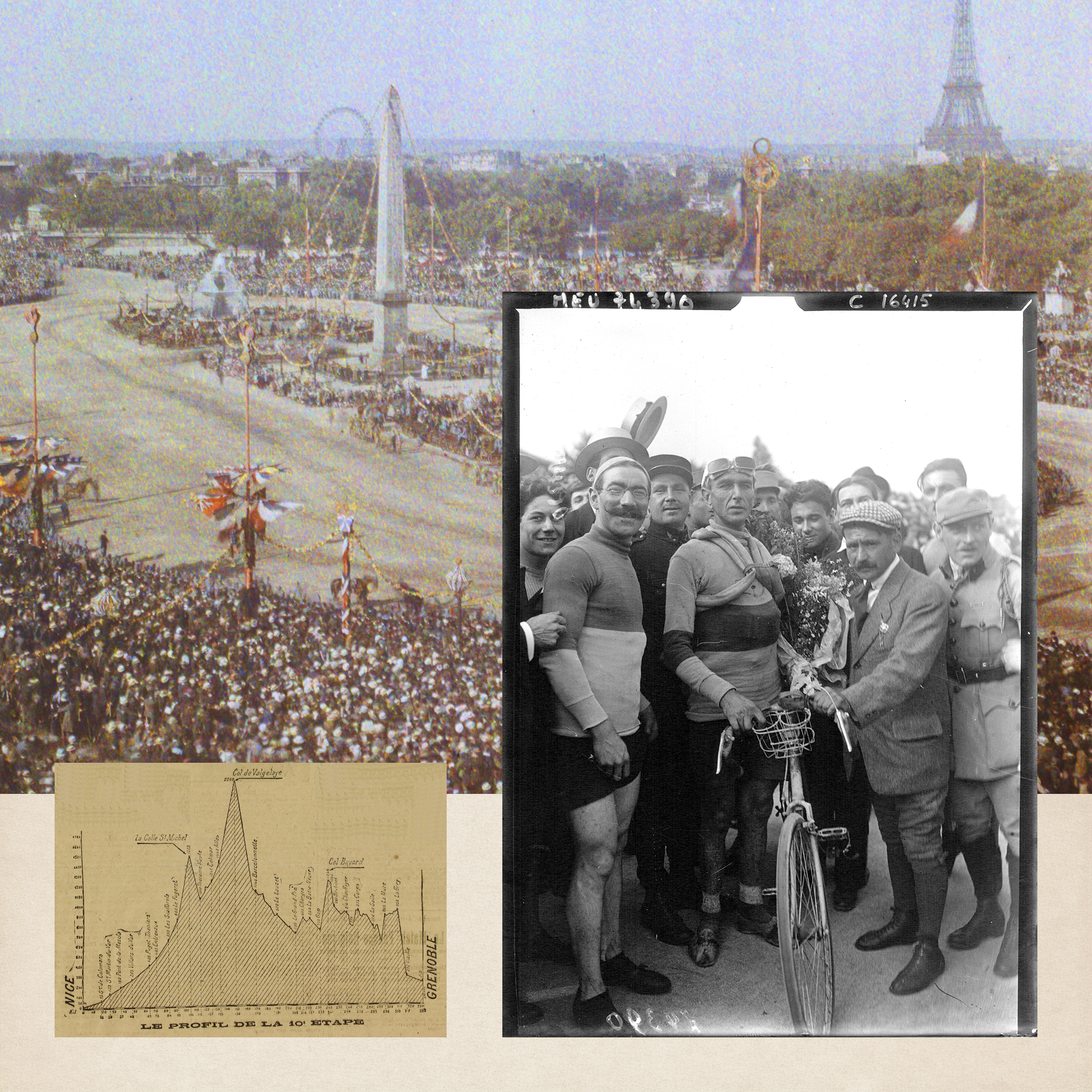
The Tour de France in 1919, the first race after WWI
Bike mania
In 1861, the French created the vélocipède. It was the first true bicycle and the origin of vélo, the French word for bike. The vélocipède was a gorgeous machine. It was constructed from an ornamented wrought-iron frame, iron tires and wooden wheels. It was an exciting invention, but also referred to as the boneshaker because metal tires were a really bad idea.
This machine triggered what’s known as the golden age of bicycles and a total mania around cycling.
By 1881 we were squarely in the Second Industrial Revolution and change was extensive. As the bicycle adopted chains, gears, and inflatable tires, printing in France was experiencing an even more transformative event—freedom of the press.
The media volcano
Industrialisation led to fast presses and cheap paper. Graphic designer, illustrator and painter Jules Chéret and others developed ingenious color printing techniques to produce iconic, human-scale, illustrated posters. Advertising had arrived.
A deluge of general-interest, mass-circulated dailies resulted. They were powered by novel ad revenue and sold as impulse buys directly on the street. Many dailies gained significant readership by utilising the new rail network to distribute papers deep into the countryside.
Special-interest dailies on topics like fashion, politics, business and, most of all, sports, were fiercely competitive. The most effective strategies for retaining daily readership: serialised content with gripping cliffhangers, and contests that promoted personal and social rewards. A third tactic? Inventing dazzling spectacles with exclusive event coverage.
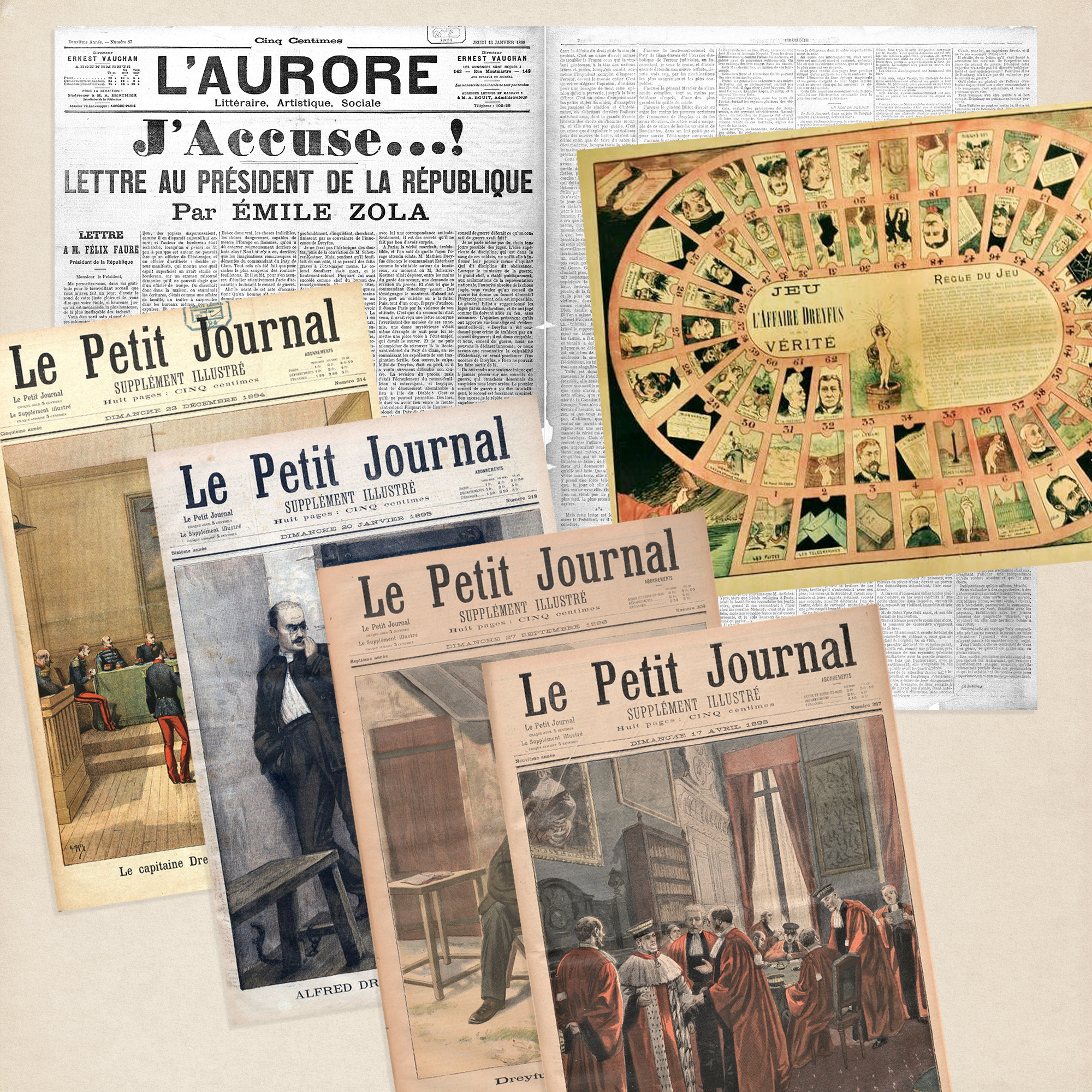
Dreyfus Affair coverage and the engagement-driving board game
Devastating scandal
In 1894, Captain Alfred Dreyfus, a Jewish artillery officer in the French Army, was wrongfully accused of passing military secrets to Germany. He was publicly humiliated, stripped of his rank, and sent to prison. Four years later, French journalist Émile Zola published an open letter that accused the army and government of a cover-up and antisemitic persecution. Deep fault lines were exposed in France and the country fell into a full-blown national crisis. It fractured into two groups: the pro-Dreyfusards—the intellectuals, republicans, and secularists—and the anti-Dreyfusards—the army, the church, nationalists, and royalists. The Dreyfus Affair devastated families, friends and professional relationships of all kinds.
France's dominant sports daily in the 1890s was called Le Vélo. It was printed on green paper and was owned by Pierre Giffard, a pro-Dreyfusard. His biggest advertiser was an automobile magnate named Albert de Dion, an anti-Dreyfusard. In 1899, Giffard published a scathing criticism of Dion and his industrialist friends. Dion didn’t just pull his ads. He started a rival daily called L'Auto-Vélo, printed on yellow paper, specifically to destroy Le Vélo.
Le Vélo eventually folded, but not before Giffard was able to sue Dion and force L'Auto-Vélo to be legally renamed to L'Auto. The name change was extraordinarily damaging to circulation and put L'Auto’s editor Henri Desgrange in a precarious situation. He needed to do something spectacular to save the paper. A coworker named Géo Lefèvre had an intriguing idea.
Le Tour de France
Lefèvre’s idea combined the momentum of industrialisation and media, a societal obsession with bikes, a white-hot ideological scandal, and the most sophisticated marketing technique of the time to create the first modern mass-media event—the Tour de France.
One hundred twenty-three years ago, backers financed 20,000 francs in prize money. Three thousand francs was reserved for the winner alone, roughly three years salary. Sixty people from five countries signed up. Just 21 of them were professional cyclists.
In the beginning, riders confronted "dangerous" and "bizarre" terrain on fixed-gear bikes. They faced mud and ice, rutted mule tracks, infrastructure decimated by war, punishing distances and a mountain cluster referred to as the "circle of death."
These brutal conditions were designed to ratchet up drama around the media spectacle. Riders carried pouches filled with ether, cocaine, strychnine, and chloroform to manage pain and help with endurance. They consumed huge amounts of beer, wine, and brandy before, during and after stages, sometimes even dismounting to raid roadside cafésbefore major climbs.
After its first run, L'Auto's daily circulation jumped from 25,000 to 65,000. By 1923, it hit over half a million.
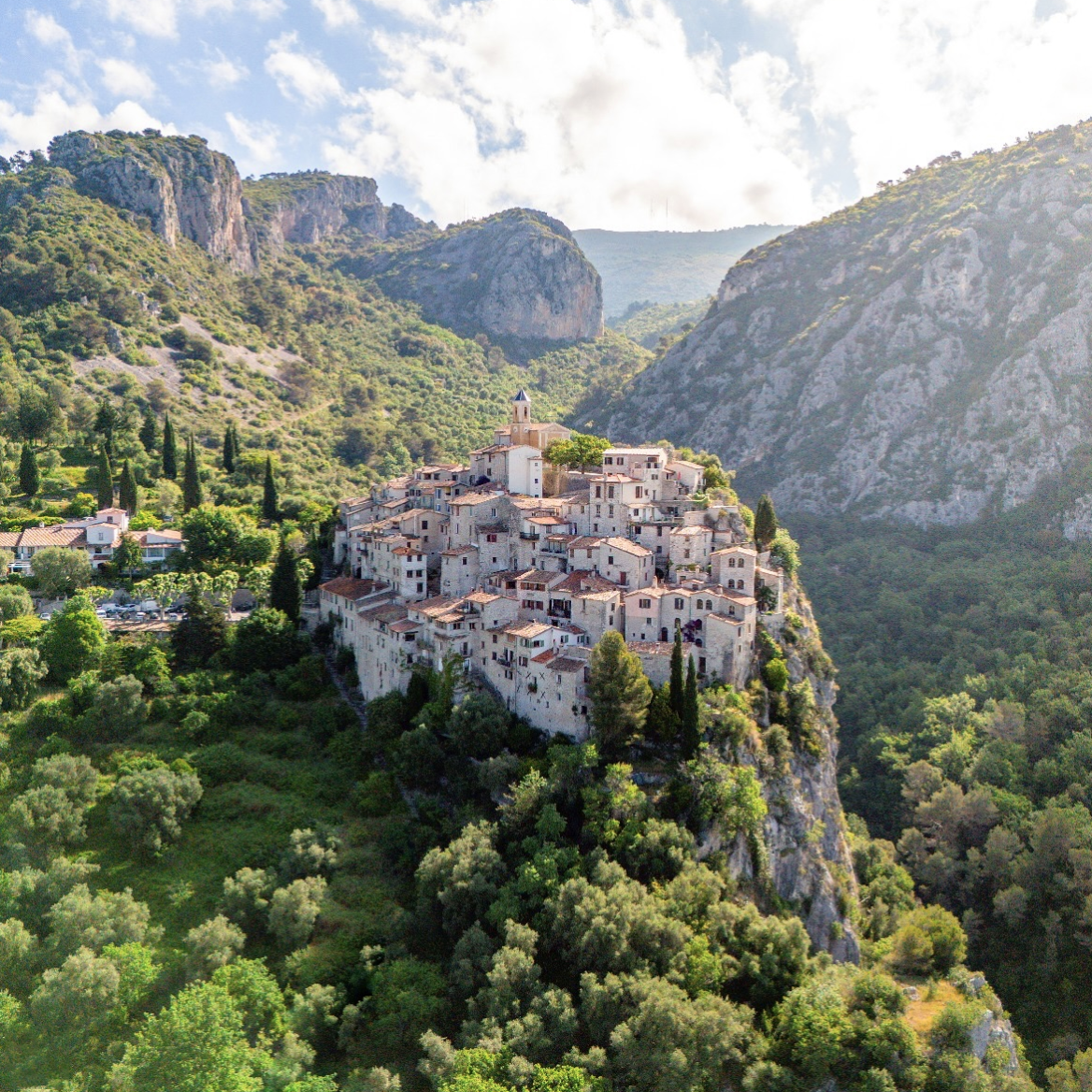
Traffic in the sky
Grueling from the start, the Tour de France has grown into one of the most prestigious sporting events in the world. Riders adapt to major challenges as bicycle design, nutrition, and sports medicine improve exponentially. The Tour remains a mass-media event, sponsored by a wide range of global commerce. Even the bananas I buy at the market are an official sponsor of the Tour. Seriously. They have logo stickers and little French flags on them. It’s bananas.
In 1959, for the first time ever, live aerial television captured the race from a helicopter. It was a sensational technological moment that invited fans to follow the athletes in motion. Today, cinematic drone footage captures medieval fortresses built into cliffs, centuries old villages, ancient grottes, alpine passes, and lavender fields. The footage is truly beautiful and compelling, whether you care about cycling or not.
Géo Lefèvre’s brilliant marketing stunt has been recycled and adapted for over a century. The same strategy that won a 19th-century newspaper war has transformed into an annual 21st-century advertisement for tourism in France.
On Sunday, I’ll lead an enthusiastic group of fans on a very early morning cycle. We’ll ride up the Champs-Élysées and around the Arc de Triomphe. We’ll spray champagne and lift bikes in the air. By 7:30am the Gendarmerie Nationale will close these streets and Paris will once again gather by the thousands to welcome home the final stage of the Tour de France. Find it on a TV near you.
Also…
I am not on social media ⚔️ and this is my way of staying connected, sharing my community, and praying that you tell all your friends, family members and coworkers to book a tour with me.
If you liked this story, share it!