La Route du Soleil—Exodus to the Beach
Issue No. 3 ⚜️ August 21, 2026
This edition of The Dispatch is dedicated to Deezer’s 2019 HR rep Anne-Sophie, who unnervingly introduced me to August-in-France by ghosting me for a month mid-hiring process. I did eventually get the job... in September.
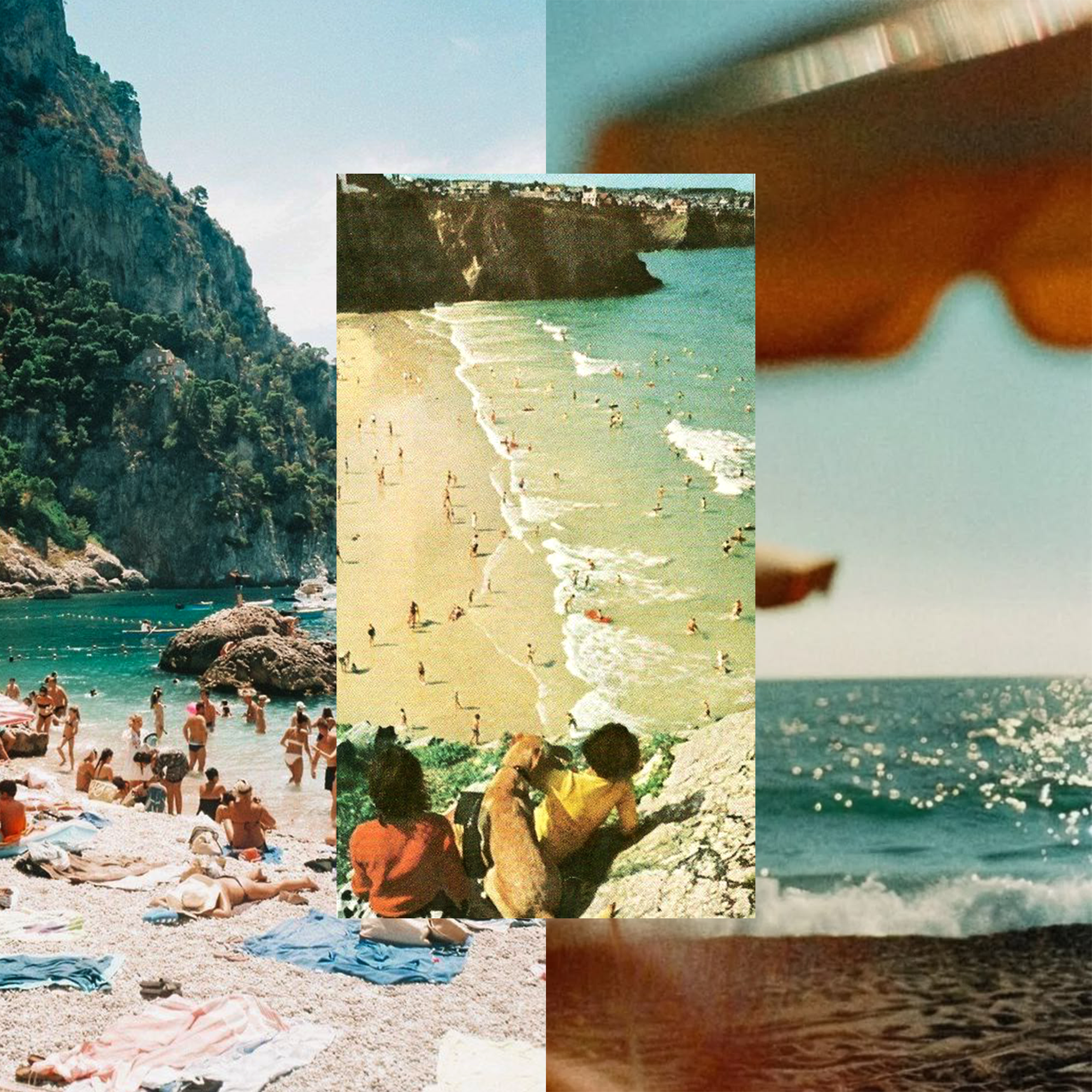
During the golden age of motoring, darling pastel “butter pat” cars cruised bumper-to-bumper along France’s most celebrated holiday road from Paris and Lyon down to the dazzling Côte d'Azur. Long hair and scarves and silly smiles fluttered out of open windows and convertible tops as vacationers made their way south, embracing the brand new idea that a suntan was a symbol of leisure and privilege.
People on bikes and tandems and mopeds joined the cars in the rush to the Mediterranean, everyone pitching in to fix flat tires and stalled engines, or whatever complications came their way. Traffic jams were an expected part of the adventure that opened up roadside opportunities throughout some of France's most beautiful regions. Families would line up for the traiteurs, the farmer stands, acquiring things like a melon de Cavaillon, a prized cantaloupe grown in Provence, or a Suze apéritif made with wild yellow gentian roots. They sampled local cuisine, cheese, produce, wines and more, sometimes picnicking on the side of the road. They played games, they laughed, they motored, they beached.
From 1945 through the 1960s, The Route Nationale 7, nicknamed La Route du Soleil (the Sun Road), represented the sheer joy of leaving for vacation after the horrors and deprivations of the war. Immortalized by Charles Trenet’s iconic hit Route Nationale 7 (please do grab some sunshine for the ears and take a brief musical detour back to 1955), the RN7 created the Michelin Guide (this year’s RN7 guide here), inspired France’s best selling card game of all time1000 Bornes, and captured the hearts and memories of generations during the boom of automobile tourism.
But where did it all come from? Pack up the babies, grab the old ladies, and join me on a drive down memory lane.
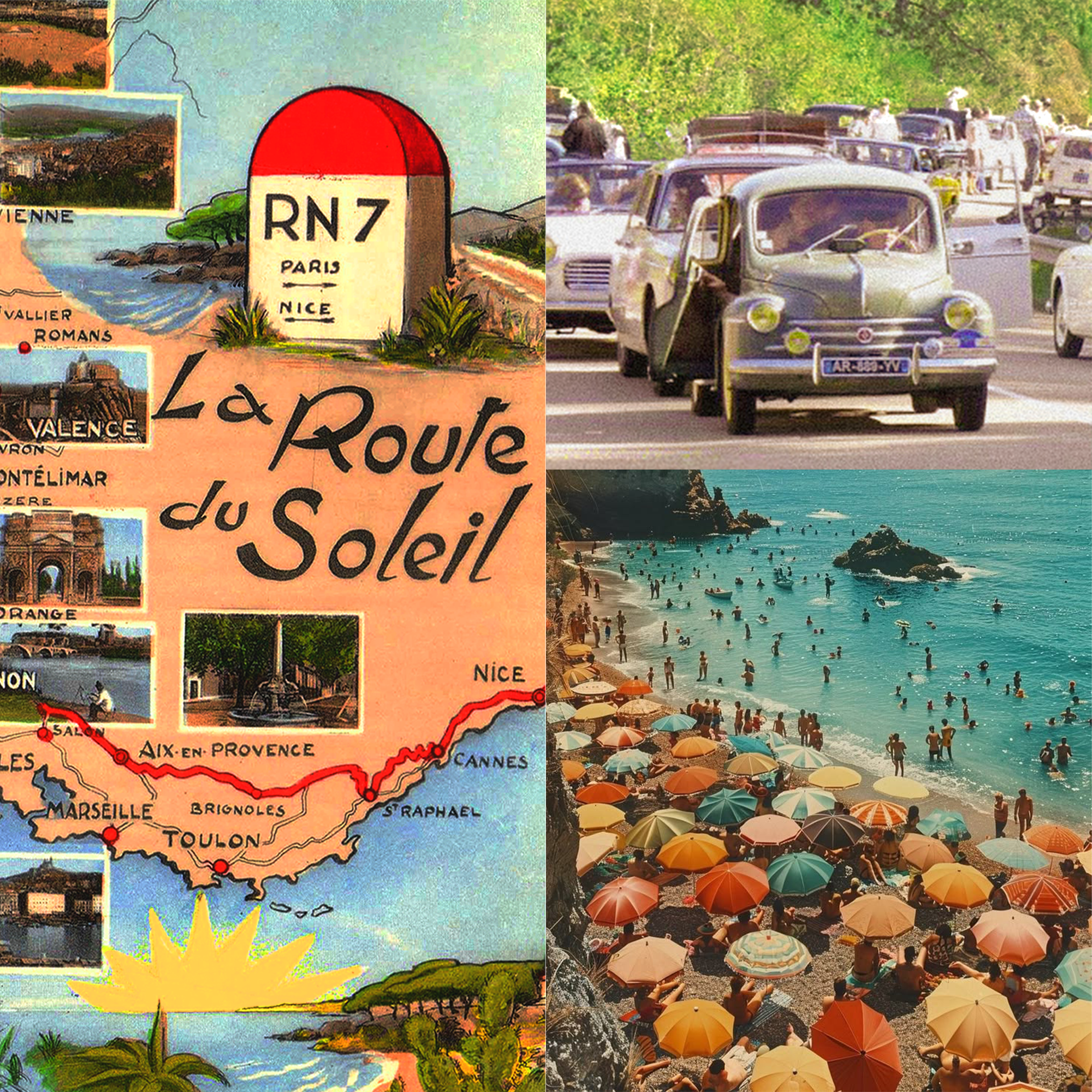
Romans, espionage and emperors
The RN7 is an all-roads-lead-to-Rome situation. Back in 20 BC (inconceivable), the Romans built a courier route between Avignon and Lyon called the Via Agrippa. It was part of a network of 21,000 kilometers of roads they created using an instrument called a groma, a tool that has proven to be nearly as accurate as satellite technology today (I find this unsettling), to reorganize their newly conquered region of Gaul (aka future France).
More than a thousand years later (inconceivable), medieval King Louis XI arrived on the scene. A connoisseur of espionage, Louis would dress as a beggar, or a pilgrim and traipse around the capital incognito, manipulating a vast network of spies from all levels of society to keep up with the hot goss’ of the kingdom. His enemies called him “The Spider,” accusing him of spinning webs of lies and conspiracies. Apparently interested in information, Louis created the first Royal Post route in 1478, extending the Via Agrippa north from Lyon to Paris.
By the 1500s, this road was in regular use and elm trees were planted along the route to provide shade. In 1553, Robert Estienne published Le Guide des chemins de France, the first ever modern road guidebook. Over the next few centuries, the Sun King provided the money and administration to expand the road networks at scale, extending the former Via Agrippa to the Mediterranean Sea (1670). The National School of Bridges and Roads standardized engineering processes (1747), and Napoleon implemented the official impériale numbered road system (1811), including the Route Nationale 7, the once Roman Via Agrippa.
The mandated summer crush
During the interwar period, Léon Blum and his newly formed Front Populaire won the May elections of 1936. Nationwide factory strikes that year led to the signing of the Matignon Accords, a package of major social reforms that included collective bargaining rights, higher wages, a 40-hour work week, and two weeks of paid leave. The moment is remembered as “kilometer zero” because, for the first time ever, working-class families could afford to own a modest car and go on vacation. One old worker is famously quoted saying, “Thanks to you [Blum], I got to visit the sea before I died.”
By 1959, 6.2 million people in France owned a car. Fifty-seven percent of them used those cars to drive to the beach down the RN7.
Today, every French employee is entitled to a minimum of 30 working days of paid vacation per year. It is required that ten or more of those days are used in one continuous block between May and October. They are often claimed in the blazing-hot month we find ourselves in currently—August.
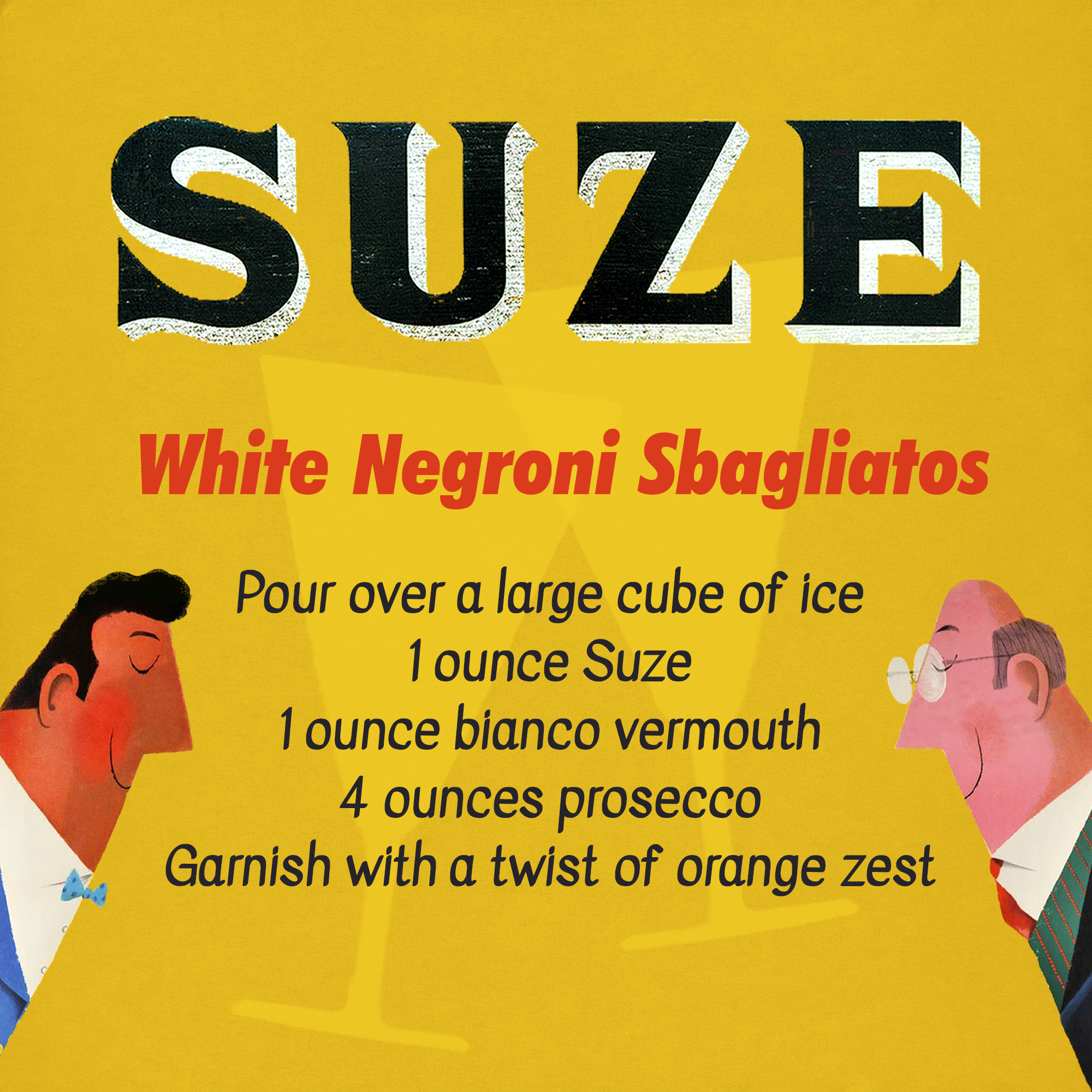
Teleport to the French Riviera with a homemade Suze cocktail 🥂 ⛱️
The exodus: Gone beachin’
August in Paris has a strange, noticeable calm. Many businesses close for 2-3 weeks at a time, sometimes indicated by handwritten signs taped to their doors. Work kind of grinds to a halt and there’s not a lot of pressure to do much of anything at all.
We’ve had a truly bizarre summer this year marked by repeated, unprecedented heatwaves. Parisians are actually swimming in the Seine and the Canal Saint Martin (inconceivable) to cool down. Many of the employed, though, are still flooding south to the fabulous French Riviera, sometimes by car, but mostly by high-speed train.
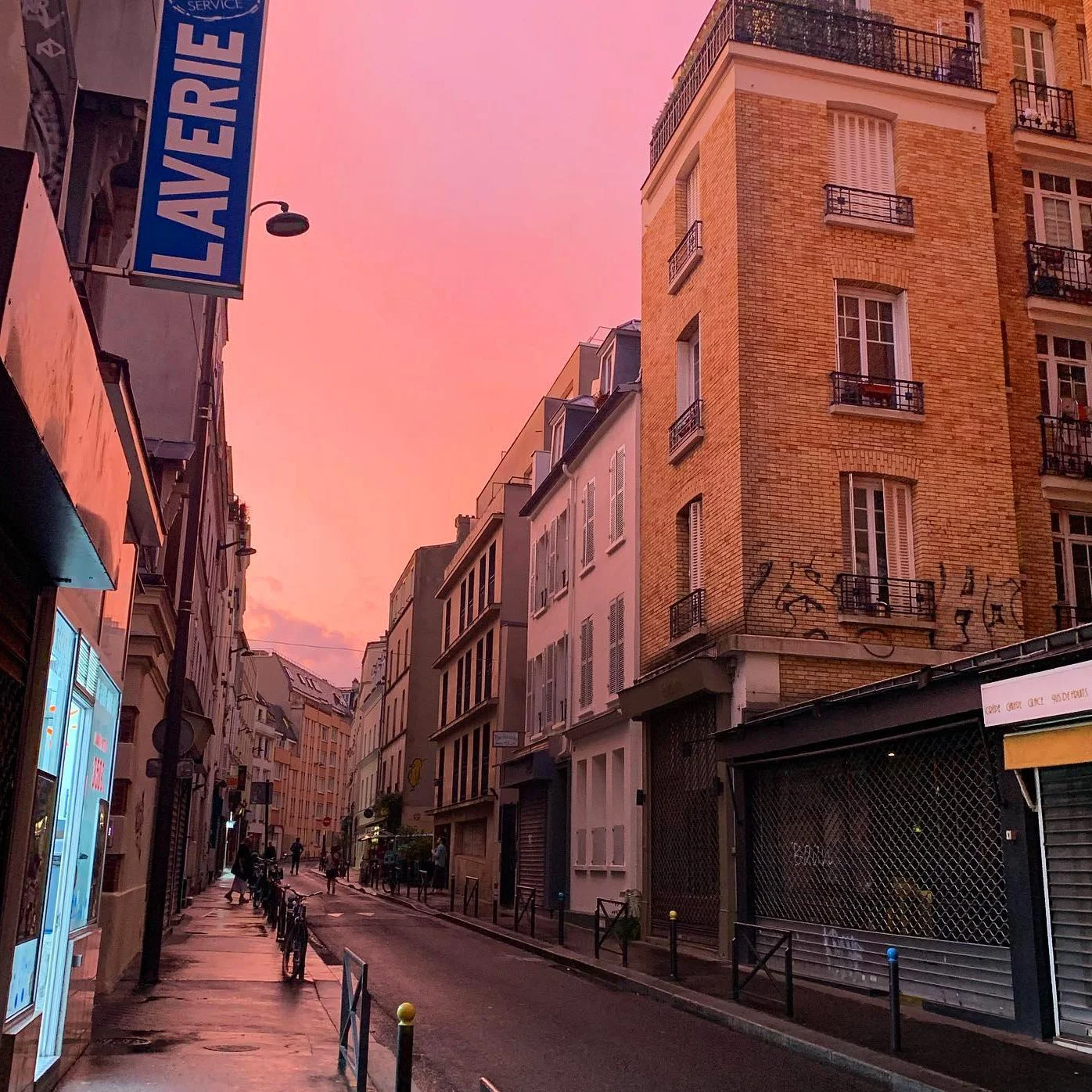
Village Jourdain, Paris 19eme, August 21h30
Just last year, the Route Nationale 7 was demoted to a departmental road, existing now only in fragments and under different names. I’ve read that if you set GPS to avoid expressways and tolls, though, navigation apps still suggest the old RN7 route, regardless of what it's technically called today. Nostalgic road trip enthusiasts and iconic towns from its heyday are also working to preserve the memory of the RN7 through summertime reenactments with vintage cars, period dress, and historic signage that mimics the 20th-century Michelin road markers. All is not lost.

Featured tourists this month are me and Max in Menton, the gorgeous little border town flirting with Italy and the final stop on Le Route du Soleil 🌊 🍋 🚆
I was introduced to the Route Nationale 7 in a book by Stephane Henaut and Jeni Mitchell called A Bite-Sized History of France: Gastronomic Tales of Revolution, War, and Enlightenment. It was a lot of fun and a more insightful read than I expected, not a bad choice for these final weeks of flip flops and halter tops wherever you might be vacationing.
Also…
I am not on social media ⚔️ and this is my way of staying connected, sharing my community, and praying that you tell all your friends, family members and coworkers to book a tour with me.
If you liked this story, share it!